Weekly Crypto Market Update January 18th-22nd
The primary driver of crypto sentiment and price action this week was not endogenous to the crypto-asset market but rather a sharp, geopolitical “black swan” event that shook both traditional markets and crypto.
President Trump’s January 18th announcement of a 10% tariff on key European allies, contingent on the U.S. acquisition of Greenland, triggered a violent de-risking event across all speculative categories. Bitcoin, which had been consolidating near the psychological $96,000 handle, experienced a “liquidity flush,” liquidating nearly $900 million in leveraged longs as the market pivoted to traditional safe havens. However, the subsequent successful IPO of BitGo on the NYSE suggests that while short-term price action remains sensitive to macro shocks, the structural institutionalization of the asset class is reaching a terminal velocity that is difficult to reverse.
Key Takeaways
-
Geopolitical Sensitivity: BTC’s temporary decoupling from “digital gold” status during the tariff announcement underscores its current role as a high-beta liquidity proxy rather than a pure geopolitical hedge. Gold’s surge to $4,800 highlights a “preference for the physical” during NATO-centric instability.
- Infrastructure Legitimacy: The BitGo IPO (ticker: BTGO), pricing above range at an implied $2.08B valuation, marks the end of the “crypto discount” for regulated service providers. Backing from Goldman Sachs and Citi provides a necessary seal of approval for the next wave of capital.
- Regulatory Stasis: The delay of the CLARITY Act in the Senate Banking Committee is a tactical setback for Q1 optimism. The pivot toward housing affordability suggests that the “Crypto Summer” of legislative certainty may be pushed into the late spring.
Macro & Market Structure
The Liquidity Regime
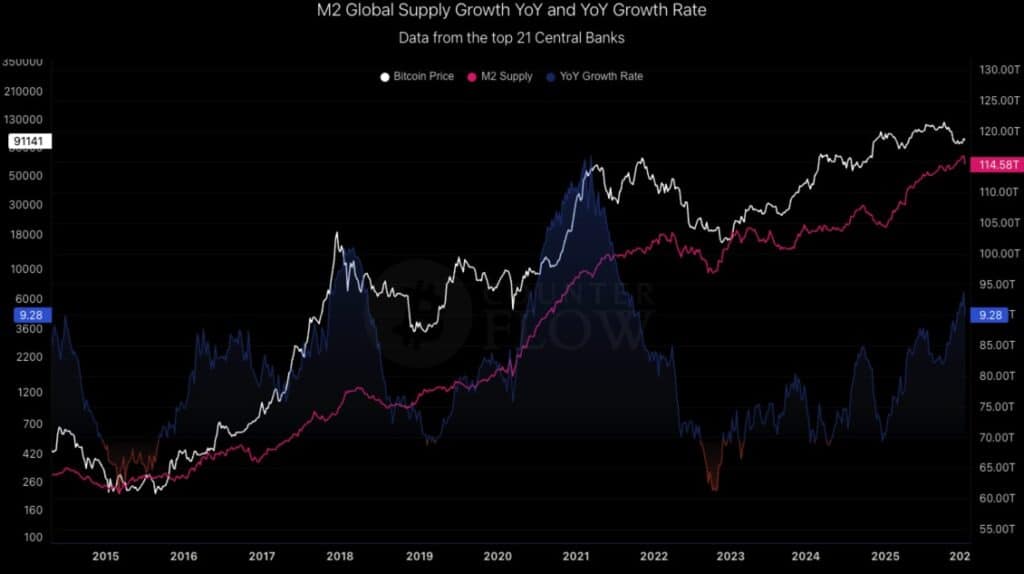
We are currently navigating a complex volatility regime. Global M2 money supply growth has stabilized at approximately +1.0% on a three-month rolling basis, but the “cost of carry” for institutional players remains elevated. The Fed’s current stance, complicated by a criminal investigation into Chair Powell, has introduced a political risk premium into U.S. Treasury yields. We view the current environment as a “liquidity tug-of-war”: expansionary fiscal rhetoric is fighting against a risk-off sentiment triggered by trade war escalations.
How Assets Performed This Week
[ crypto-widget coin=”bitcoin” link=”https://99bitcoins.com/goto/bestwallet” text=”Buy with Best Wallet” ], [ crypto-widget coin=”ethereum” link=”https://99bitcoins.com/goto/bestwallet” text=”Buy with Best Wallet” ], and most altcoins saw outflows this week, among the market uncertainty. Bitcoin shaved off 5.23% from it’s price, Ethereum faired a bit worse at -12.22% and crypto’s total market cap dropped just below 7%.
| January 18th | January 22nd | Percent Change | |
| Bitcoin | $93,635 | $88,737 | -5.23 |
| Ethereum | $3,347 | $2,938 | -12.22 |
| Total Market Cap | $3,360,736,914,106 | $3,130,345,656,216 | -6.86 |
Correlation Observations
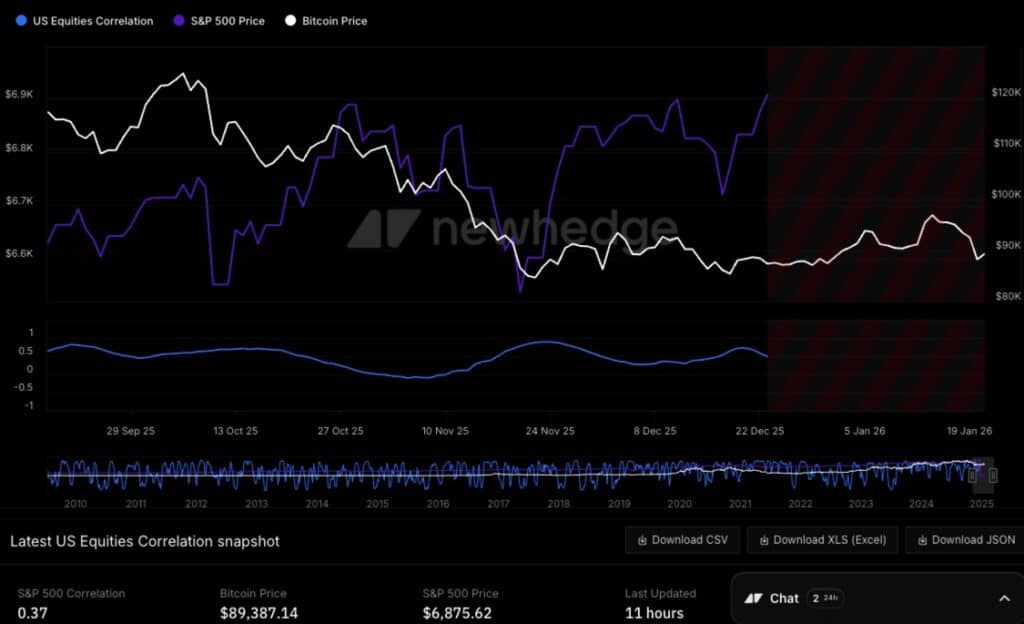
The 30-day correlation between Bitcoin and the S&P 500 has spiked to 0.37, driven by the synchronized sell-off in “risk-on” assets following the tariff news. Conversely, the correlation with Gold has inverted to -0.15 this week, as the yellow metal absorbed the safe-haven flows that Bitcoin failed to capture during the initial two-hour $3,600 plunge.
Technicals: The Majors
Bitcoin: Testing the ETF Cost Basis
The $91,000–$92,000 zone is not merely a technical level; it represents the estimated aggregate cost basis for the 2025 institutional cohort (the “ETF Class”). While spot price dipped to $91,900, we observed aggressive “dip-buying” from authorized participants, though it was not enough to prevent a deeper breach below the $90k level. The basis trade remains profitable, though the narrowing “Kimchi Premium” in South Korea, amidst an investigation into missing government Bitcoin, suggests a cooling of retail fervor in the APAC region.
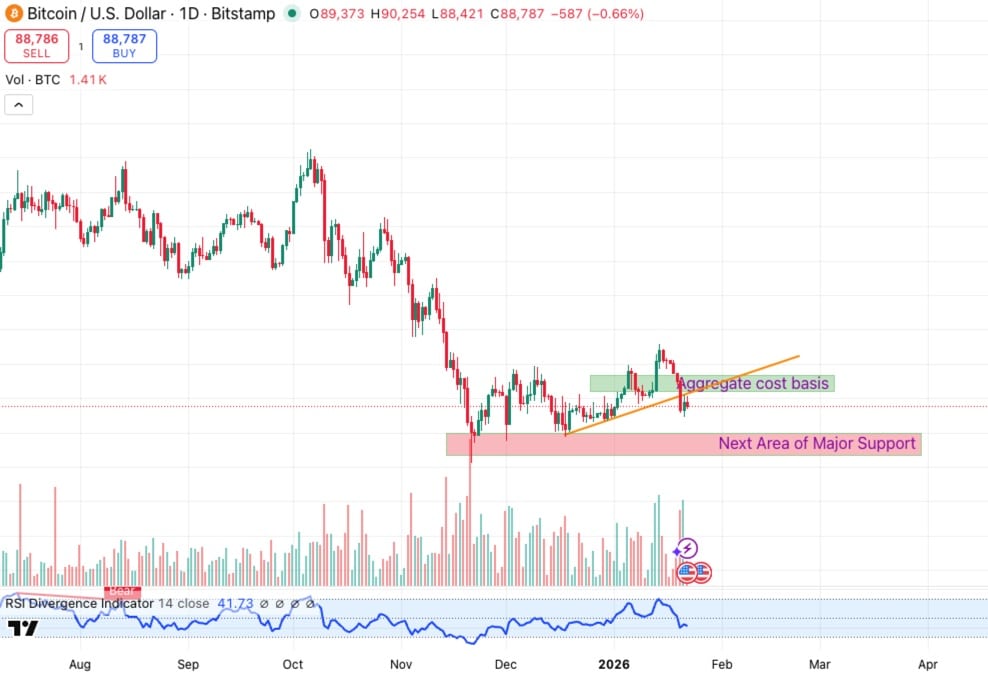
Bitcoin fell below a weak trendline and could go as low as 84k, where the next major level of support is.
Ethereum: The L2 Value Capture Dilemma
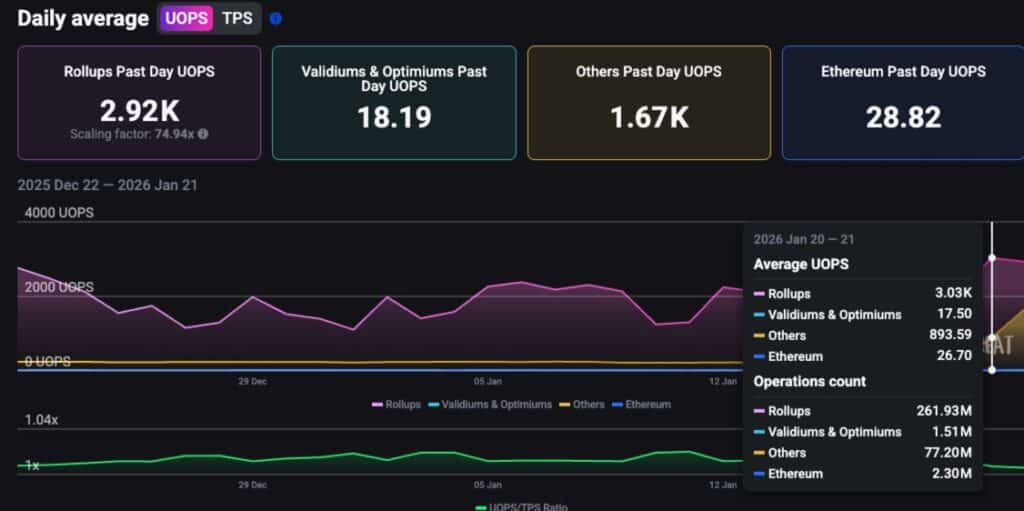
Ethereum continues to face a fundamental identity crisis regarding value accrual. While network activity is at an all-time high, the L2 Value Capture remains problematic for mainnet stakers. Approximately 88% of transaction revenue this week was retained by Arbitrum, Base, and Starknet, leaving Ethereum mainnet fees at a 12-month low. Until the “burn rate” from L1 blobs is adjusted via EIP-7762 (scheduled for late 2026), ETH will likely continue to underperform BTC on a risk-adjusted basis.
Sector Spotlight: AI & The Agentic Economy
We are closely monitoring Agentic Inflows (capital controlled by autonomous AI agents). This week, we tracked over $140 million in on-chain volume originated by “Heuristic Arbitrageurs“, which are AI entities operating without human intervention on the Solana and Base networks.
DePIN Maturation: Projects focusing on decentralized compute (e.g., Akash, Render) saw a 12% increase in utilization rates this week as centralized GPU providers faced potential tariff-related supply chain disruptions.
The “River” Bet: Justin Sun’s $8 million injection into the River DeFi project is a play on “Chain Abstraction.” By integrating sTRX yields with stablecoin infrastructure, Sun is attempting to capture the “unbanked” AI agent liquidity that requires high-velocity, low-cost settlement layers.
All this leads to growing bullish sentiment around the crossroads of AI and the crypto economy and potential for a long-term play, though it is worth warning that if this AI hype is anything like the dotcom boom, over 90% of early projects will fail and ultimately go to zero.
My Take: It is too early to try picking DePIN AI winners for the long term, though there is certainly some interesting short-term trade potential.
On-Chain Intelligence
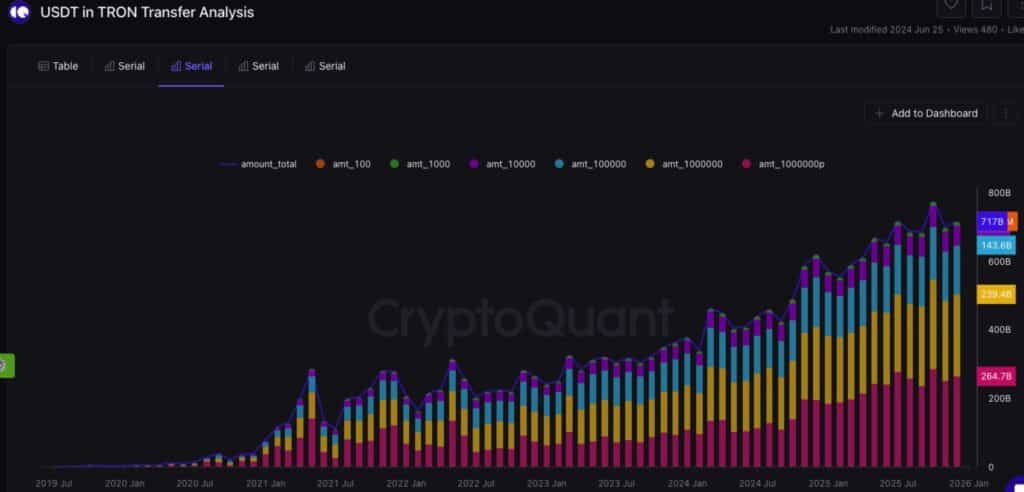
Stablecoin Velocity: USDT velocity on the TRON network increased by 18% this week. The Elliptic report regarding Iran’s $500M USDT acquisition suggests that stablecoins are increasingly used for “Sanction-Neutral Trade.” While this creates regulatory headwinds, it demonstrates the “asymmetric utility” of the asset class.
Exchange Flows: We noted a significant outflow of BTC from centralized exchanges to cold storage during the $91,900 dip, suggesting that “smart money” viewed the Greenland sell-off as a volatility event rather than a structural trend reversal. We analyzed this behaviour as a “flight to safety” among growing geopolitical turmoil, with Bitcoin holders rushing to get their coins off of exchanges, as soon as Trump ruled out use of force and softening on EU tariffs, BTC flows increased back onto exchanges.
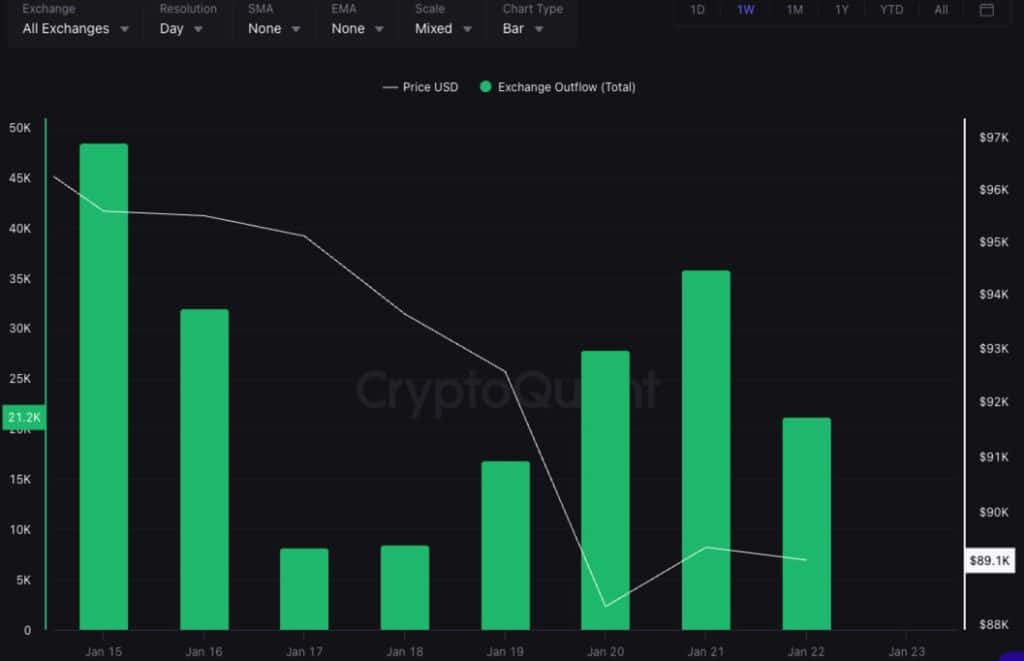
The move back onto exchanges likely signifies anticipation from investors that Bitcoin will return to around the $97k level where we expect to see significant sell pressure.
Regulatory & Policy Watch
The “Clarity Act” delay is the headline here. The shift in Senate focus toward housing affordability suggests a cooling of the “Trump Pump” for crypto legislation. AI, tariffs, geopolitical turmoil, and the Trump administration’s focus on affordability for US citizens are taking some of the attention away from crypto legislation. However, despite the Clarity Act delay, we do not anticipate a return to the “Gensler-era” attack on crypto as Atkins sits at the head of the SEC and has already shown to be crypto-forward, though it is unknown how the jurisdictional relationship will unfold between the SEC and CFTC until the Clarity Act is introduced.
Meanwhile, the GENIUS Act remains the only firm guardrail for stablecoin issuers, which explains why BitGo’s IPO was greeted with such enthusiasm; they are one of the few entities with the “compliance moat” necessary to survive the current gridlock.
Upcoming Events to Watch
CME Altcoin Launch (Feb 9)
The addition of Cardano (ADA), Chainlink (LINK), and Stellar (XLM) to the CME derivatives suite on February 9th is the next major structural tailwind. We expect “front-running” liquidity to move into LINK specifically, given its role as the primary oracle for the RWA (Real-World Asset) sector. We would not be surprised to see this be a “sell the news” event, with price appreciation happening in the days leading up to the event followed by a weak sell-off.
DISCLAIMER: This report is for informational purposes only and does not constitute financial, investment, or legal advice. Digital assets are subject to extreme volatility and risk of total loss. Consult with a qualified professional before making any investment decisions.
The post Weekly Crypto Market Update January 18th-22nd appeared first on 99Bitcoins.
About The Author


