Bitcoin Price Analysis: BTC Eyes $85K, Understanding the ‘Triple Threat’ Behind the Price Target
Three signals are converging on a single Bitcoin price analysis target of $85,000, and for once, they are not pointing in different directions. Research firm Glassnode has identified what analysts are calling a ‘triple threat’ setup: Bitcoin has broken above critical cost basis levels on-chain, futures funding rates have flipped from negative to neutral, and options market mechanics are now forcing dealers to hedge in the direction of the rally.
The central question this raises is structural, not speculative. Is this a genuine multi-signal alignment pointing toward BTC $85K – or is it three ways of describing the same momentum move? The data deserves a closer look.
DISCOVER: The Next 1000x Crypto Gem Before It Lists on Binance
Crypto ETFs and the Institutional Floor Beneath Bitcoin’s Rally
The first leg of the triple threat is the institutional ETF bid, and it has been reshaping Bitcoin’s market structure in ways that matter for the $85,000 target.
Spot Bitcoin ETFs have absorbed sustained demand from institutional desks that treat minor pullbacks as buying opportunities rather than exit signals.
As Wall Street’s cumulative ETF inflows have crossed $58 billion, the sheer scale of that capital creates a structural floor that retail-driven markets simply do not have.
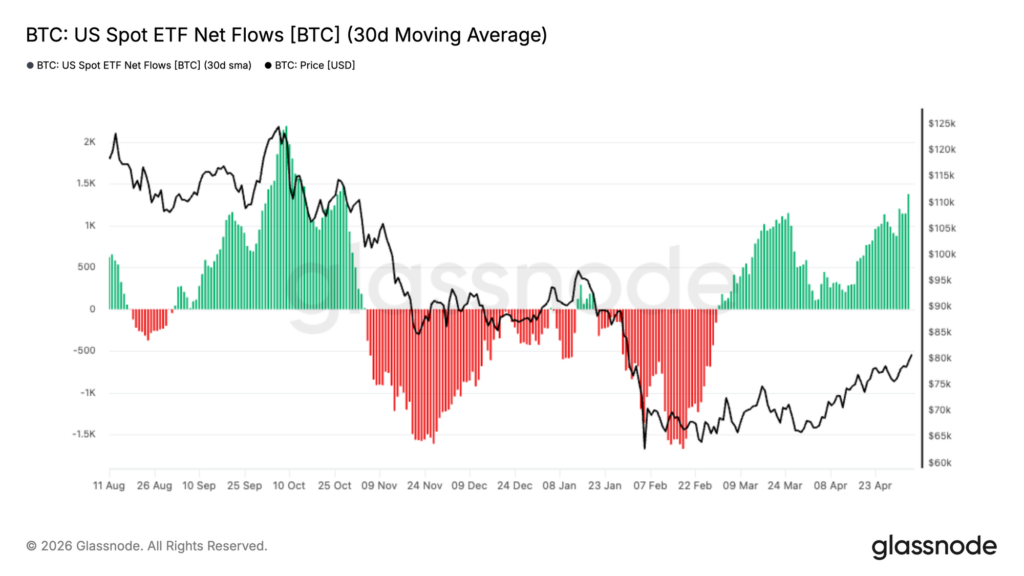
Here is how the mechanism works. When institutional desks accumulate through ETF wrappers, those coins leave the liquid supply and sit in custody. Think of it like water draining out of a bathtub – less available supply at any given price level means sellers have to compete harder for buyers.
Bitfinex analysts noted that for most of the past three months, funding rates were negative, meaning hedge funds were running a popular arbitrage: buying spot Bitcoin or ETFs while simultaneously shorting futures contracts. That trade created steady downward pressure in futures markets even as Bitcoin rallied.
Now funding rates have flipped to neutral or slightly positive. Bitfinex analysts put it plainly: “The flip toward neutral doesn’t invalidate the carry trade; it indicates that shorts paying for the privilege are no longer present at scale.
Either funding migrates back negative as new ETF capital recreates the trade or the squeeze has further to run.” The institutional floor is real – but it only holds while net flows stay positive. BlackRock’s IBIT accumulation patterns suggest those desks are not done buying. That is not a guarantee. It is a structural tendency.
DISCOVER: Best Meme Coin ICOs to Invest in 2026
Whale Accumulation: On-Chain Data Shows Who Is Actually Buying
The second signal comes from on-chain data, and it is the one that most directly informs the Bitcoin technical analysis case for $85,000.
Glassnode tracks two levels that matter most to active market participants: the True Market Mean at $78,200 – the average price paid by investors whose coins are actually circulating, and the Short-Term Holder Cost Basis at $79,100, representing what traders who bought within the last six months paid on average.
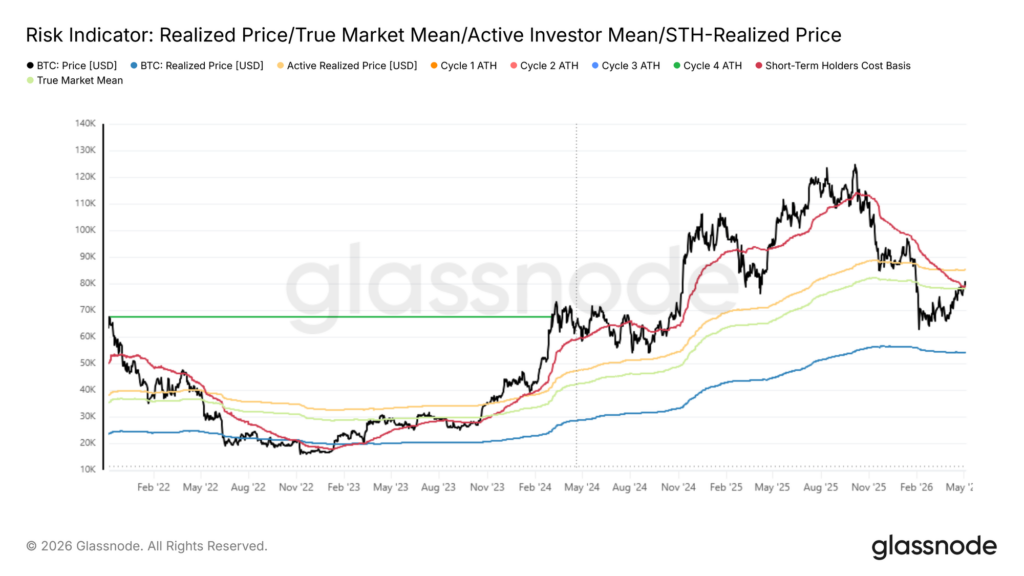
Bitcoin breaking above both levels simultaneously is significant. When price sits below these thresholds, most active holders are underwater, sentiment sours, and selling pressure builds. When price clears them, the same holders move into profit, reducing their urgency to sell and compressing available supply.
Glassnode analysts noted: “Should price sustain above these two levels in the coming week, the deep value regime that persisted from early February 2026 through now would rank among the shortest episodes of its kind in Bitcoin market history.”
Whale accumulation patterns reinforce this picture. Large-wallet buyers – the addresses holding significant BTC that institutional and high-net-worth participants control, appear to have been absorbing supply in the $75,000–$79,000 range during the correction.
Coins moving off exchanges and into long-term custody is the on-chain fingerprint of that behavior. Glassnode identifies the next major structural level as the Active Realized Price near $85,200, which tracks the cost basis of all non-dormant supply. “Attention now shifts to the next major resistance at the Active Realized Price near $85.2k,” Glassnode analysts stated, “which represents the next structural threshold the market must reckon with.”
Bitcoin Technical Analysis: The Options Mechanic That Could Force $85K
The third signal is the most technical – and arguably the most powerful in the near term. Options market makers currently carry short gamma exposure of roughly $2 billion clustered around the $82,000 level, according to Glassnode.
If that framing sounds abstract, here is the plain-English version: these dealers are positioned in a way that forces them to buy Bitcoin as its price rises, in order to stay hedged.
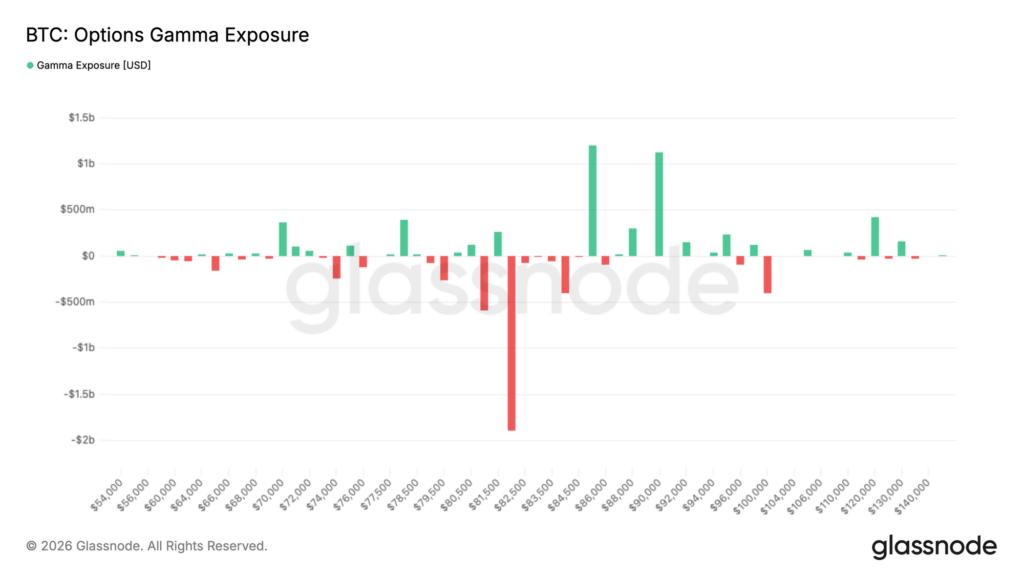
Glassnode described the feedback loop directly: “Short gamma means dealers are positioned in a way that forces them to hedge in the direction of the move, buying as price rises and selling as it falls. This creates a feedback loop that can accelerate price action, which helps explain the recent push toward $83,000.”
Think of it like a crowded escalator – once the momentum starts, each additional step upward pulls more participants along involuntarily.
This mechanic works symmetrically in reverse. If Bitcoin turns lower from current levels, those same dealers would likely hedge by selling, adding to downside pressure. The options setup amplifies whatever direction the market moves; it does not create direction on its own.
Recent Bitcoin technical analysis targeting $86,000 has pointed to similar RSI and momentum dynamics building across the daily and weekly timeframes, consistent with the confluence picture forming now.
Bitcoin Price Analysis: Three Scenarios: Where Does Bitcoin Go From $80,000?
The setup for BTC is constructive because multiple signals are lining up at the same time: ETF inflows, whale accumulation above key cost basis levels, and dealer positioning mechanics. One signal alone can fail. Three aligning together matter more.
Right now, the key levels are clear.
As long as BTC holds above roughly $78.2K–$79.1K, the bullish structure stays intact and keeps the path open toward $82K and potentially $85.2K.
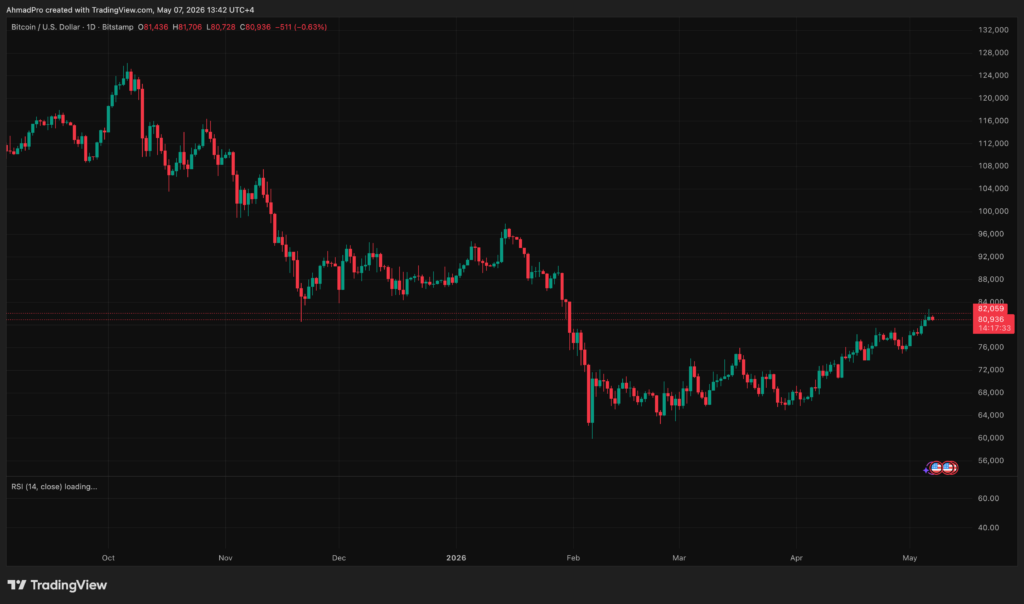
That $85.2K area is the real level to watch. A confirmed move above it would signal a major structural shift and historically has led to stronger extensions in past cycles.
More likely short term, BTC consolidates between $80K and $83K while the market works through funding and positioning.
The risk is still macro. Bitcoin remains tied closely to equities, so a sharp risk-off move in tech could quickly flip the setup bearish.
If BTC loses $78.2K, the structure weakens fast, and downside toward $75K–$76K opens again.
So this is a mechanically bullish setup, but also a fragile one. The same positioning forces that can accelerate upside can accelerate downside if support breaks.
The post Bitcoin Price Analysis: BTC Eyes $85K, Understanding the ‘Triple Threat’ Behind the Price Target appeared first on 99Bitcoins.
About The Author


